


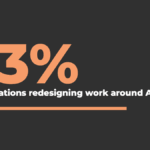



A March 2026 survey of 2,000 employed Americans found that workers say they are performing three jobs simultaneously in their current roles, and over half (53%) have not received a raise or promotion to reflect the added workload compression. The study, conducted by Talker Research and commissioned by Office Beacon, puts numbers on a trend that has been building since the post-pandemic hiring freezes began in late 2023.
The data goes further than you might expect. Seventy-eight percent of workers say they have been “voluntold” to take on new responsibilities in the past year, meaning they were assigned work they did not apply for or agree to but were expected to handle anyway. On average, respondents say nine new tasks are added to their plates each year. And 74% report that the added assignments have hurt their ability to do their actual job well.
The numbers behind the workload squeeze
The scale of workload compression becomes clearer when you look at it alongside other 2026 labor data. The Bureau of Labor Statistics’ February jobs report was described by Indeed’s Hiring Lab as “overwhelmingly disappointing,” with hiring rates remaining near historic lows. Companies are not backfilling roles. They are distributing the work to whoever remains.
Forty percent of employees in the survey agreed with the statement, “I love my job, but I don’t feel like I can keep up with it anymore.” That figure jumps to 55% among Gen Z workers and 47% among healthcare workers. These are not disengaged employees looking for an excuse to coast. These are people who care about their work and are telling you they cannot sustain the pace.
If you are a manager, you need to start measuring workload compression the same way you measure revenue or customer satisfaction. It is a leading indicator of attrition, quality decline, and burnout. And right now, most organizations are not tracking it at all.


What this means for managers and teams
The most dangerous aspect of workload compression is that it is invisible in standard performance metrics. Your team’s output might look stable or even be increasing. But the denominator has changed. You are getting that output from people who are stretched past the point of sustainability.
Here is what I see happening in mid-size companies. A team of eight gets reduced to six through attrition. The hiring freeze prevents backfilling. The remaining six absorb the work. Output stays roughly constant, so leadership assumes everything is fine. Six months later, two more people leave, and suddenly you have a crisis that looks sudden but was building for a year.
The connection to the broader burnout epidemic is direct. Workload compression is burnout’s delivery mechanism. You do not burn out because you are doing one hard job. You burn out because you are doing three average jobs stacked on top of each other, with no acknowledgment that the load has changed.
Your best performers are the most at risk because they are the ones who absorb extra work without complaining. They compensate with longer hours and more context switching until they hit a wall. By the time they tell you they are struggling, they are already interviewing elsewhere.
What leaders should do now
Workload compression is measurable if you are willing to track it. Here are the specific metrics and actions that can help you get ahead of this problem.
- Conduct a role-versus-reality audit. For each person on your team, compare their official job description to the actual work they performed in the last 90 days. Count the number of distinct responsibilities. If anyone is consistently performing duties from two or more separate job descriptions, you have workload compression that needs to be addressed through redistribution, automation, or hiring.
- Track hours-per-deliverable, not just deliverables. If your team produced 100 reports last quarter and 100 reports this quarter, those numbers look the same. But if those reports are now taking 40% more hours per report because the people producing them are also handling three other workstreams, your productivity has actually declined. Measure the input, not just the output.
- Set an explicit workload ceiling. Define the maximum number of concurrent projects or responsibility areas any single person can hold. I recommend no more than two primary responsibilities and one secondary responsibility per person. When the ceiling is hit, something must come off the plate before anything new goes on.
- Compensate for scope expansion. If you cannot reduce the workload, at minimum acknowledge it financially. The 53% who received no raise for their expanded roles will remember that when a recruiter calls. Spot bonuses, title adjustments, or off-cycle raises are all options. Doing nothing is the most expensive option because it costs you a full replacement hire.
- Kill the lowest-value work. Every team has activities that persist out of habit rather than impact. Weekly status reports that nobody reads. Meetings that could be emails. Approval chains with too many steps. Audit your team’s work for tasks that can be eliminated entirely, and redesign the decision load so your people spend time on work that actually matters.
Broader context and what to watch
Workload compression is not a temporary side effect of economic uncertainty. It is becoming a permanent feature of how mid-size companies operate. The combination of hiring freezes, layoff aftershocks, and AI-driven productivity expectations has created a new baseline where doing the work of multiple people is simply expected.


KPMG described the current labor market as “a miserable year for workers,” and the BLS data backs that up. Job openings have declined, quit rates are low (because workers feel trapped), and the power dynamic has shifted firmly toward employers. That shift makes it tempting for leaders to ignore workload compression because, in the short term, the work is still getting done.
Watch the quit rate over the next two quarters. When recession fears ease (or when they materialize and companies begin hiring for recovery), the workers who absorbed three jobs without a raise will leave. The organizations that measured, managed, and compensated for workload compression will retain their best people. The ones that ignored it will face a talent crisis that is entirely self-inflicted.
The 53% figure is not just a statistic about compensation. It is a measure of organizational honesty. If your people are doing more work, you either pay for it or you lose the people. There is no third option.