




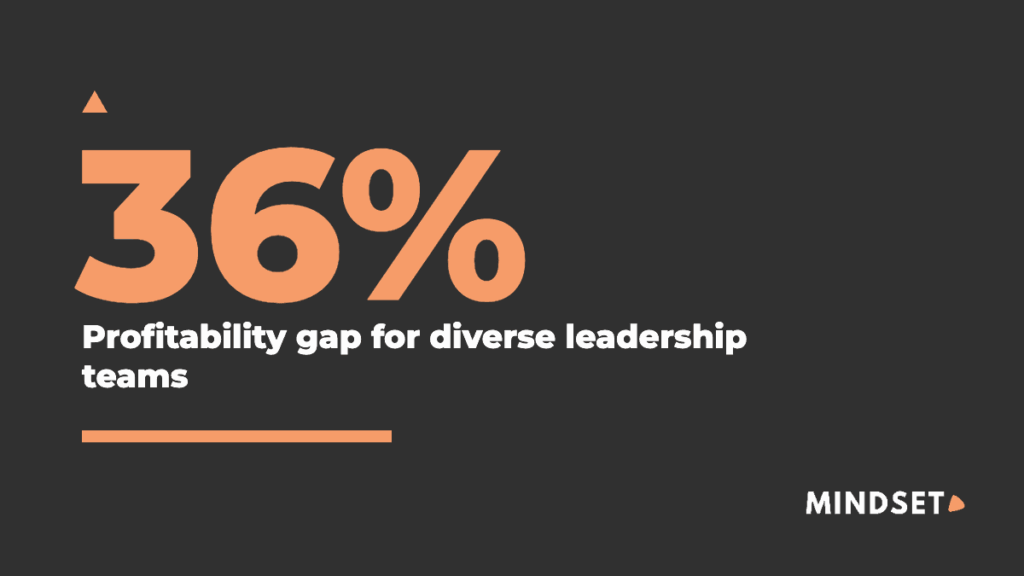
In 2019, Vivian Hunt was leading McKinsey’s London office when her team published a number that would reshape how boardrooms talk about diversity. After analyzing data from more than 1,000 companies across 15 countries, her research found that companies in the top quartile for ethnic and cultural diversity on executive teams outperformed those in the bottom quartile by 36% in profitability.
Not engagement scores. Not employer branding metrics. Profitability.
That finding has since been extended. Harvard Business Review’s analysis of over 3,500 publicly traded firms found a strikingly similar pattern — diverse leadership teams consistently delivered stronger financial returns. The correlation held across industries, geographies, and company sizes.
But here’s the part that most corporate DEI programs get wrong: the mechanism driving those returns is not what the training decks assume.
The Cognitive Diversity Thesis
The popular explanation goes something like this: diverse teams bring diverse perspectives, diverse perspectives lead to better ideas, better ideas lead to better results. It’s a clean narrative. It’s also incomplete.

Katherine Phillips, the late Columbia Business School professor who spent her career studying group dynamics, identified something more uncomfortable. In a 2016 Harvard Business Review article, she explained that diverse teams don’t outperform because they feel better. They outperform because they feel worse — at least initially.
“The mere presence of diversity in a group creates awkwardness, and the need to diffuse this tension leads to better group problem solving,” Phillips wrote. Homogeneous teams reach consensus faster, but that speed comes at the cost of rigor. They’re more likely to assume shared understanding, skip the debate, and converge on the first reasonable answer.
Diverse teams argue more. They challenge assumptions more frequently. They take longer to reach decisions. And those decisions turn out to be right more often.
A study Phillips co-authored found that diverse teams made better decisions 87% of the time compared to homogeneous groups. Not because any individual member was smarter, but because the group’s cognitive friction forced a higher quality of reasoning.
What the Numbers Actually Show
McKinsey’s data tells a layered story that has only gotten stronger with each update.
The firm’s 2023 report, “Diversity Matters Even More,” tracked the relationship over nearly a decade. Companies in the top quartile for gender diversity on executive teams were 25% more likely to achieve above-average profitability. But the gap between the most and least gender-diverse companies had widened to 48% — up from 15% when McKinsey first measured it in 2015.

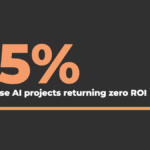
Ethnic diversity showed an even steeper premium. That 36% profitability edge for top-quartile companies wasn’t static; it had grown from 33% in the previous study.
Meanwhile, the Boston Consulting Group surveyed more than 1,700 companies across eight countries and found that firms with above-average diversity in their management teams reported 19% higher innovation revenue and 9% higher EBIT margins. The innovation finding matters because it points toward a specific mechanism — these companies weren’t just running existing operations more efficiently. They were generating more new revenue from products and services introduced in the last three years.
That’s the thread connecting all of these studies. Diversity doesn’t make execution better. It makes decision-making better. And in a business environment defined by uncertainty and rapid change, decision quality is the ultimate competitive advantage.
Why Most DEI Programs Miss the Point
If the evidence is this strong, why aren’t results more widespread?
Stefanie Johnson, a management professor at the University of Colorado Boulder and author of Inclusify, argues that most organizations treat diversity as a representation problem when it’s actually a utilization problem.
“Companies count heads,” Johnson told me. “They celebrate when the numbers move. But if you hire diverse talent and then build a culture where only the loudest voices get heard, you’ve spent money on potential you’ll never unlock.”
The research supports her skepticism. A 2013 Harvard Business Review study found that employees at high-diversity companies were 45% more likely to report growing market share and 70% more likely to report capturing a new market — but only when those companies also scored high on inclusion measures. Diversity without inclusion produced no meaningful financial lift.
This distinction explains why some organizations invest heavily in diverse hiring pipelines yet see no change in their bottom line. They’re adding ingredients without changing the recipe.
The Decision Quality Framework
The most useful way to think about the diversity-profitability link isn’t through the lens of fairness — though fairness matters independently. It’s through the lens of decision architecture.
Every organization makes thousands of decisions per week. Strategy calls. Hiring choices. Product pivots. Budget allocations. Each one carries risk, and the quality of each one depends on the range of information, experience, and mental models brought to bear.
Homogeneous teams have blind spots they can’t see precisely because everyone shares them. A room full of people with similar educational backgrounds, career paths, and cultural reference points will systematically miss the same risks and overweight the same opportunities.
Phillips called this “informational diversity” — the idea that demographic diversity serves as a proxy for cognitive diversity because people with different life experiences genuinely process information differently. It’s not a feel-good story. It’s an information theory argument.
And the data from those 3,500 companies bears it out. The profitability premium isn’t evenly distributed across all business functions. It’s concentrated in areas where decision quality matters most: R&D investment, market entry, M&A, and pricing strategy. The companies capturing the 36% edge aren’t just more diverse. They’re more diverse at the top, where the biggest bets get made.
The Uncomfortable Correlation
McKinsey has been careful — and rightly so — to note that their findings show correlation, not causation. Companies with diverse leadership might also be the kind of companies that attract top talent, invest in innovation, and operate in growing markets. The diversity premium could be partially a selection effect.
But that caveat cuts both ways. Even if diverse leadership is partly a marker of organizational health rather than a direct driver, it tells you something important: the healthiest, most adaptive, most profitable companies in the world consistently end up with diverse leadership. Whether that’s cause or symptom, it’s a signal no manager should ignore.
The Chicago Booth Review put it bluntly in a recent analysis: the question is no longer whether diverse leadership correlates with performance. It’s whether your organization can afford to assume it doesn’t matter.
Vivian Hunt’s original research team expected pushback when they published the 36% finding. What they got instead was a flood of requests from CFOs asking for the methodology. Not HR directors. CFOs.
That shift — from diversity as an HR initiative to diversity as a financial strategy — might be the most important data point of all.