



In 2013, Nick Bloom ran an experiment that would define the remote work debate for a decade. He partnered with Ctrip, a 16,000-employee Chinese travel agency, and randomly assigned call center workers to either work from home or stay in the office for nine months.
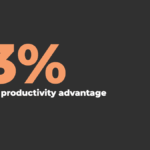
The remote workers were 13% more productive. They worked more minutes per shift — fewer breaks, fewer sick days — and they handled more calls per minute, likely because their homes were quieter than the open-plan office. Attrition dropped by 50%. The company estimated savings of roughly $2,000 per employee per year.
That study, published in the Quarterly Journal of Economics, became the foundational data point for every remote work argument that followed. But Bloom didn’t stop there. He’s been updating the research continuously, and the latest data tells a more nuanced story than either side of the debate wants to hear.
The Productivity Picture in 2026
Bloom, an economics professor at Stanford and the lead researcher at WFH Research, has spent the years since 2020 tracking remote work patterns across hundreds of companies and millions of workers. The central finding has held up: remote and hybrid workers match or exceed in-office productivity for most knowledge work roles.
But the detail matters. A 2024 study published in Nature — one of the most rigorous peer-reviewed journals in science — found that hybrid workers (three days in office, two at home) showed productivity roughly equal to fully in-office workers, with a 33% reduction in attrition. That’s not a productivity boost. That’s the same output with dramatically lower turnover costs.


“The productivity debate is largely settled by the data,” Bloom said in a 2024 conversation with the International Monetary Fund. “For structured hybrid arrangements, there is no meaningful productivity penalty, and the retention benefits are substantial.”
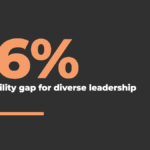
The 2026 data from WFH Research shows the gap continuing to widen — but only for specific job types. Roles that involve deep individual work (software development, writing, data analysis, design) show the largest remote productivity gains. Roles that require intensive real-time collaboration (early-stage product development, complex negotiations, crisis management) still benefit from in-person interaction.
Why the Gap Keeps Growing
Jose Maria Barrero, a co-researcher with Bloom at WFH Research and an economist at Instituto Tecnologico Autonomo de Mexico, has identified three factors driving the widening productivity gap for remote-friendly roles.
The first is tool maturity. The collaboration tools available in 2020 were adequate. The tools available in 2026 — with AI-assisted meeting summaries, asynchronous video, and sophisticated project management platforms — have eliminated most of the coordination friction that early remote work struggled with.
The second is worker self-selection. As remote and hybrid policies have stabilized, workers have sorted themselves into arrangements that match their productivity profiles. People who thrive remotely have gravitated toward remote-friendly companies. People who need office structure have found it. The sorting has improved outcomes for both groups.
The third factor is the one that rarely gets discussed: commute time reallocation. Bloom’s research consistently shows that workers reinvest a significant portion of their saved commute time into work. Not all of it — some goes to sleep, exercise, and family — but enough to represent a material increase in productive hours. When the costs of context switching are factored in, the uninterrupted focus time that remote work enables becomes an even more significant advantage.

The Managerial Variable
Here’s what gets lost in the remote-vs-office argument: the quality of management matters more than the location of work. Bloom’s data shows that well-managed remote teams outperform poorly managed in-office teams by a significant margin. The variable isn’t where people sit. It’s whether anyone is leading them effectively.
Stanford’s research found that well-organized hybrid teams outperform fully in-office teams by roughly 5%. But “well-organized” is doing a lot of work in that sentence. It means clear expectations, structured communication rhythms, intentional use of in-office days for collaboration, and managers who know how to lead across both environments.
Most managers have never been trained to do any of this. The decline in manager engagement compounds the problem. Disengaged managers default to surveillance — monitoring login times, tracking mouse movements, requiring cameras on during calls. The research is clear that these practices reduce trust and productivity simultaneously.
Raj Choudhury, a Harvard Business School professor who studies geographic flexibility, has found complementary results. His research on patent examiners at the U.S. Patent and Trademark Office showed that workers given full geographic flexibility — the ability to live and work anywhere — produced 4.4% more patent examinations with no decrease in quality.
“The freedom to choose where you work is itself a productivity intervention,” Choudhury noted. “It removes a constraint that has nothing to do with the work itself.”
What the Return-to-Office Mandates Miss
Despite the data, a wave of return-to-office mandates has swept through major companies since 2023. Bloom has been characteristically blunt about what’s driving them: “The evidence does not support full-time return to office for knowledge workers. What it supports is structured hybrid. The mandates are primarily about control, not productivity.”
The WFH Research data on companies that implemented strict return-to-office policies shows a consistent pattern: a spike in attrition among high performers, a temporary increase in measured “activity” (which is not the same as output), and no sustained improvement in actual productivity metrics.
The companies that are getting remote and hybrid work right aren’t the ones making headlines with mandates. They’re the ones quietly iterating on their policies based on data — testing different hybrid configurations, measuring outcomes rather than attendance, and investing in the managerial capabilities that make distributed work actually function.
The Data Will Only Get Clearer
Bloom’s original 13% finding from that Ctrip study was for fully remote call center work — a specific context that doesn’t map neatly onto every job. What his subsequent research has shown is something more useful: the right work arrangement depends on the work itself, not on an executive’s philosophy about office culture.
For deep individual work, remote is better. For complex real-time collaboration, in-person is better. For most knowledge work, structured hybrid captures the benefits of both. And for all of it, the quality of management is the multiplier that determines whether any arrangement actually works.
The companies that treat this as a data question rather than an ideology question are the ones pulling ahead. The gap between them and everyone else — much like the productivity gap Bloom keeps measuring — just keeps growing.