

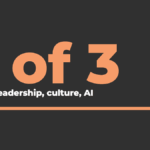



SHRM released its 2026 State of the Workplace and 2026 CHRO Priorities and Perspectives reports, drawing on surveys of HR professionals, executives, and workers across industries. The headline finding is that three forces, leadership quality, organizational culture, and AI adoption, are simultaneously reshaping how work gets done. But organizations that invest heavily in one dimension while neglecting the other two are seeing diminishing returns on all three.
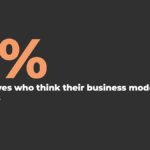
The data is specific. Ninety-one percent of workers who believe their organization effectively addresses workplace needs report job satisfaction. Among those who see their organization as ineffective, that number drops to 44%. The gap between those two groups is widening in 2026, and SHRM’s research suggests the widening is driven by lopsided investment in technology without matching investment in the people and culture that make technology useful.
The three-legged problem that most organizations solve with one leg
SHRM’s research paints a clear picture of where organizations are investing and where they are not. AI adoption is accelerating. Budgets for AI tools, platforms, and infrastructure are growing across every sector. But the investment in leadership capability and cultural adaptation needed to make AI work is lagging far behind.
SHRM’s findings indicate that while AI integration is advancing, human leadership and culture remain the true engine of organizational resilience. Technology alone does not produce better outcomes. Technology in the hands of well-led, culturally aligned teams produces better outcomes. Remove either condition, and the technology investment underperforms.
The pattern I see across organizations is predictable. A company launches an AI initiative, assigns a technology team to manage it, and measures success by adoption rates and tool deployment. Meanwhile, the managers who are supposed to integrate AI into their team’s workflow have not been trained, the cultural norms around how work gets done have not been updated, and workers are left to figure out the new tools on their own. Twelve months later, the AI platform has high login rates and low business impact.

Seventy-two percent of HR professionals and executives report that workers have higher expectations of employers today. Those expectations are not primarily about technology. They are about leadership, fairness, development, and purpose. Organizations that respond to rising expectations with technology solutions alone are solving the wrong problem.
What this means for managers and teams
If you manage a team, SHRM’s research gives you a useful diagnostic question. Of the three dimensions (leadership, culture, AI), which one is your organization investing in most, and which two are being neglected?
Most managers I talk to can answer immediately. Their organization is investing in AI. Leadership development is either stale or nonexistent. And culture is treated as a branding exercise rather than an operational priority.
The consequence shows up in your team’s daily experience. They have new tools but no guidance on when or how to use them. They have AI-generated outputs but no quality standards for reviewing them. They have productivity expectations that assume AI is saving time, even when it is not, because nobody measured whether the tool actually reduced workload or just added a new one.
SHRM’s data on job satisfaction reinforces something that should be obvious but is often ignored. Workers do not leave because of bad technology. They leave because of bad leadership and broken culture. If your organization is inadvertently undermining the intrinsic motivation that drives your best people, no amount of AI investment will compensate.
For team members, the takeaway is practical. Look at whether your organization is investing evenly across all three dimensions. If AI is getting all the attention while leadership development and culture building are afterthoughts, your work experience is likely to get worse before it gets better. The 91% satisfaction rate SHRM found is achievable, but only for organizations that treat all three legs as equally important.

What leaders should do now
SHRM’s research implies a specific action plan for organizations that want to move from single-dimension investment to integrated transformation.
- Audit your investment ratio across all three dimensions. Pull your 2026 budget and categorize every line item as leadership development, culture building, or technology/AI. If any single dimension accounts for more than 50% of your total people-and-technology spend while another accounts for less than 15%, you have a dangerous imbalance. Rebalance before you add more technology.
- Make AI adoption a leadership competency, not a technology competency. The managers who need to integrate AI into their team’s work are not the same people who select and deploy the tools. Train your managers on how to evaluate AI outputs, set quality standards for AI-assisted work, and coach their teams through workflow changes. This is a leadership skill, not a technical one.
- Measure culture with the same rigor you measure technology adoption. If you know your AI platform’s login rate, do you also know your team’s psychological safety score? Do you measure how often people speak up in meetings? Do you track whether cross-functional collaboration has increased or decreased since your last reorganization? Culture metrics are harder to collect but equally important for predicting organizational health.
- Connect the three dimensions in your communication. When you talk about AI with your team, include the leadership behaviors and cultural norms that make it work. When you talk about culture, include how technology adoption will change the way people collaborate. When you invest in leadership development, include AI fluency as a required capability. The three dimensions reinforce each other, but only if you treat them as interconnected.
- Set a 12-month integrated transformation target. Instead of separate goals for AI adoption, leadership development, and culture improvement, set one integrated target. For example: “By Q1 2027, every team will have a manager trained in AI-assisted workflow design, operating within documented cultural norms for AI use, and achieving measurable productivity improvement.” An integrated target forces integrated investment and makes it harder to let good ideas die in siloed planning meetings.
Broader context and what to watch
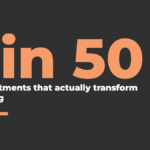
SHRM’s research arrives at a moment when other data sources are telling complementary stories. Gartner finds that only one in 50 AI investments delivers transformational value. DDI reports that 40% of stressed leaders are considering quitting. MIT’s enterprise AI study shows 95% of pilots fail to produce ROI. These are not separate problems. They are the same problem viewed from different angles: organizations are investing in technology without investing in the human systems that make technology work.
The concept SHRM uses, technology as an enabler rather than a replacement, sounds simple. In practice, it requires organizations to break the habit of treating technology investment as a substitute for the harder, slower, less measurable work of building leadership capability and cultural health.
Watch for two things over the next year. First, whether organizations begin measuring AI success by business outcomes rather than adoption metrics. Second, whether leadership development programs evolve to include AI fluency as a required capability, rather than treating AI and leadership as separate domains. The organizations that integrate these three dimensions first will have a significant advantage over those that continue to treat them as separate budget lines.
The 91% satisfaction rate is within reach for every organization in SHRM’s data. But it requires a level of integrated thinking that most leadership teams have not yet demonstrated. The research does not tell you anything surprising. It tells you something that most organizations already know but have not yet acted on. Leadership, culture, and technology have to work together. Investing in one without the other two is not a slower path to the same destination. It is a path to a different, worse destination.