


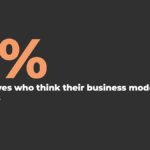
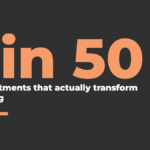
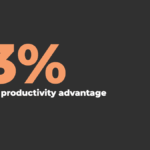

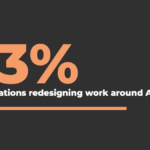

Gartner’s latest research, presented at its 2026 Finance Symposium, puts a hard number on what many managers already suspected about AI ROI. Only one in 50 AI investments delivers transformational value. Only one in five delivers any measurable return on investment at all. With worldwide AI spending projected to hit $2.52 trillion this year (up 44% year over year), the gap between investment and return has never been wider.
If you manage a team, you have probably watched this data trickle in over the past year and drawn one of two conclusions. Either AI is the future and you need to invest more, or AI is overhyped and you should wait it out. Both conclusions are wrong. The real lesson is about how organizations implement AI, not whether they should.
The data behind the 2% success rate
Gartner’s research distinguishes between three tiers of AI use cases. Routine use cases automate repetitive tasks. Advanced use cases improve analysis and decision-making. Transformational use cases aim at innovation or competitive disruption. The 2% figure applies only to that third tier, but the numbers across all tiers are still sobering.
According to a separate Gartner report from April 2026, only 28% of AI infrastructure use cases fully succeed and deliver return on investment. That means nearly three out of four AI infrastructure projects are either stalled or underperforming. The pattern is consistent across industries and company sizes.
The biggest misunderstanding I see among managers is treating this as a technology problem. It is a management problem. Organizations using identical AI models produce wildly different results depending on how they integrate the technology into existing workflows. The tool is rarely the issue. The issue is what you do with it after you buy it.


Twisha Sharma, Senior Principal in Gartner’s Finance practice, put it plainly. CFOs need to stop looking for a single ROI formula and instead build a balanced portfolio that includes productivity use cases, targeted process improvements, and selective transformational bets. That advice applies to every manager making AI decisions, not just finance leaders.
What this means for managers and teams
The most common response I see from mid-level managers is avoidance. They read the headlines, decide AI is not ready, and shelve any plans to adopt it. This feels safe. It is the opposite of safe.
While you wait, your competitors are figuring out which narrow AI applications actually work for their teams. They are not swinging for transformational home runs. They are automating meeting notes, speeding up data analysis, and cutting the time it takes to draft internal communications. These small wins compound.
The managers getting burned are the ones who treat AI as a single, big-bang decision. They pick one ambitious project, allocate significant budget, and then declare AI a failure when that one project stalls. This is the equivalent of investing your entire retirement savings in a single stock and then swearing off the market when it drops.
If your team is already stretched thin from context switching and task overload, AI should be solving those specific pain points first. Start with the work your team hates doing, not the work that sounds impressive in a quarterly review.
What leaders should do now
Gartner’s portfolio approach gives you a practical starting point. Here is how to apply it at the team level, even if you do not control the enterprise AI budget.


- Audit your team’s repetitive tasks. Spend one week tracking where your team’s hours actually go. Identify the three to five tasks that are high-volume, low-judgment, and time-consuming. These are your first AI candidates, not the flashy use cases.
- Run 30-day pilots with clear metrics. Define what success looks like before you start. If you are testing an AI tool for report generation, measure time saved per report, error rates, and whether team members actually use it after the first week. Kill anything that does not show results in 30 days.
- Separate “buy” decisions from “build” decisions. MIT’s research on enterprise AI found that external partnerships achieve 66% deployment success compared to just 33% for internally developed tools. If a vendor solution exists for your use case, try that before asking your team to build something custom.
- Budget for integration, not just licensing. The majority of AI failures happen during the transition from pilot to production. Allocate at least as much time and budget for training, workflow redesign, and change management as you do for the technology itself.
- Report on a portfolio, not a single project. When you present AI results to your leadership, show the full picture. Some projects will fail. That is expected. What matters is whether your overall portfolio of AI initiatives is moving the needle on team productivity.
If you are building your AI governance policy alongside these experiments, you will have a much easier time scaling what works.
Broader context and what to watch
Gartner’s findings land during what many analysts are calling the “trough of disillusionment” for enterprise AI. The hype cycle peaked in 2024, and we are now in the hangover phase where organizations confront the distance between their expectations and their actual results.
This is normal. It happened with cloud computing, with mobile, and with every major technology shift of the past 20 years. The organizations that came out ahead were not the earliest adopters or the biggest spenders. They were the ones that treated implementation as a management discipline rather than a technology purchase.
The next wave to watch is agentic AI, which Gartner identifies as the likely driver of the next ROI cycle. Unlike generative AI (which produces content), agentic AI can take actions, make decisions, and chain together multi-step workflows. This technology is still early, but it has a more direct path to measurable business value because it automates processes, not just outputs.
For now, the 2% number is a wake-up call, but not the one most people think. The lesson is not that AI does not work. The lesson is that treating AI like a product you buy instead of a capability you build is a recipe for wasted money. If you manage a team, the question is not whether to invest in AI. The question is whether you are willing to invest in the management discipline required to make it pay off.