



A founder I know spent three weeks in January running an OKR planning process that would make any consultant proud. Cross-functional workshops. Alignment sessions. A beautiful Notion board with cascading objectives from company level to individual contributor. By March, nobody was looking at it. The quarterly review felt like archaeology — the team was excavating goals they barely remembered setting. She told me afterward that OKRs “just don’t work for us,” but when I looked at what they’d actually built, the problem had nothing to do with the framework. It had everything to do with three structural decisions they’d made before writing a single objective.
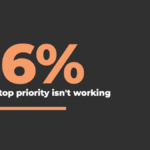
This is a pattern that plays out in roughly 60% of organizations that adopt OKRs, according to recent benchmark data. The framework itself is elegant — simple enough to explain in five minutes, flexible enough to work at any scale. But most implementations fail for the same three structural reasons, and they’re all fixable once you see them clearly. This essay diagnoses each failure pattern and provides the structural fix that actually makes OKRs deliver on their promise.
We drew on the Harvard Business Review’s research on team-level OKRs, MIT Sloan’s strategic alignment research, and a 2026 benchmark study of 200+ startups to identify where implementations consistently break down — and what the teams that succeed are doing differently.
Mistake #1: Too many objectives dilute everything
The most common structural mistake is also the most intuitive one to make. Leadership teams sit down for quarterly planning with a whiteboard full of priorities, and nobody wants to be the person whose initiative gets cut. So the team compromises by keeping seven or eight objectives, reasoning that ambitious organizations should be able to pursue multiple fronts simultaneously.
This kills OKRs faster than anything else. When a team has seven objectives, they effectively have zero — because the entire point of the framework is to force prioritization. OKRs exist to answer the question “what matters most right now?” and when the answer is “everything,” you’ve learned nothing. Your team walks out of the planning session with the same scattered focus they walked in with, except now there’s a spreadsheet documenting it.


The research backs this up consistently. Teams that maintain three or fewer objectives per quarter dramatically outperform those with five or more. One organization that reduced their quarterly objectives from seven to two didn’t just complete both — their employee engagement scores increased by 23 points because teams finally experienced the satisfaction of meaningful completion instead of perpetual partial progress.
The fix is uncomfortable but straightforward. Every leadership team needs to have what one operator I know calls “the murder meeting” — a session specifically designed to kill objectives, not create them. You start with everything the organization could pursue, and you argue about what gets cut until you’re down to two or three. The discomfort of that conversation is a feature. If choosing your objectives doesn’t feel painful, you haven’t actually prioritized. The teams that make the best decisions under pressure are the ones willing to say no to good ideas in service of great ones.
Mistake #2: Key results that describe outputs, not outcomes
The second structural mistake is subtler and more corrosive. It happens when teams write key results that describe activities rather than outcomes — things like “launch the new onboarding flow,” “publish 12 blog posts,” or “conduct 50 customer interviews.” These look like key results. They’re specific. They’re measurable. They have numbers attached. But they’re outputs masquerading as outcomes, and the distinction matters enormously.
An output tells you what the team did. An outcome tells you what changed because of what the team did. “Launch the new onboarding flow” is an output. “Reduce time-to-first-value from 14 days to 7 days” is an outcome. The difference seems semantic until you realize that output-based key results let teams hit 100% of their goals while making zero impact on the business. You launched the onboarding flow — congratulations. Did it actually help customers get value faster? Nobody measured that, because the key result didn’t ask the question.
Benchmark data from 2026 shows that roughly half of all key results across organizations are effectively KPIs in disguise — numbers teams were already tracking rather than outcomes they were actively trying to change. This transforms OKRs from a goal-setting system into an elaborate reporting mechanism. Teams spend their time documenting what’s already happening instead of pushing toward what should be happening.
The structural fix here is a simple litmus test. For every proposed key result, ask: “Could we achieve this and still have failed?” If the answer is yes, you’re measuring an output. A team could publish 12 blog posts and see zero increase in organic traffic. They could conduct 50 customer interviews and learn nothing actionable. The key result needs to capture the change you’re actually trying to create. This forces harder thinking upfront — which is exactly what the OKR framework was designed to produce.


Mistake #3: No connection between team OKRs and company OKRs
The third mistake is an alignment problem, and it’s the one that scales most dangerously. In many organizations, the company sets its OKRs, and then each team sets their own — but the connection between the two is assumed rather than explicit. Leadership trusts that teams will naturally orient their objectives toward the company’s priorities. They rarely do.
MIT Sloan’s research on strategic alignment found something striking: only 28% of executives and middle managers responsible for executing strategy could list three of their company’s strategic priorities. If the people accountable for execution can’t articulate what the organization is trying to achieve, there’s no mechanism for their team-level goals to support it. Everyone is rowing — some of them quite hard — but they’re rowing in different directions.
This happens because most organizations treat OKR cascading as a top-down waterfall. The CEO sets company OKRs, hands them to VPs, who hand them to directors, who hand them to managers. By the time the objectives reach the teams doing the actual work, they’ve been diluted through four layers of interpretation. The engineering team’s OKRs might technically trace back to a company objective, but the connection is so attenuated that it provides no real guidance for daily decisions.
Harvard Business Review’s research on this problem suggests a fundamentally different approach: set OKRs at the team level rather than the individual level, and make alignment a two-way conversation rather than a top-down cascade. Instead of asking “how does your team’s work support our objectives?”, ask “what outcome could your team produce this quarter that would make the biggest difference for the company’s priorities?” This frames alignment as a strategic question rather than a compliance exercise.
The practical mechanism for this is what some operators call a “line of sight” check. Every team OKR should be able to answer, in one sentence, how achieving it advances a specific company objective. If the team can’t articulate that connection clearly — not in corporate jargon, but in plain language — the OKR is probably measuring activity rather than strategic contribution. Organizations that build this check into their planning process see dramatically better alignment without the rigidity of forced top-down cascading. It’s the same principle that makes effective delegation work — you define the outcome and let the team determine the path.
The structural pattern underneath all three mistakes
These three failures — too many objectives, output-based key results, and disconnected alignment — share a common root cause. They all emerge from organizations treating OKRs as a planning artifact rather than an operating system. The quarterly planning session produces a document, and then the organization goes back to operating the way it always has.
The teams that make OKRs work treat them as the central nervous system for decision-making throughout the quarter. When a new initiative is proposed mid-quarter, the first question is “which OKR does this advance?” When resources need to be reallocated, the OKRs determine where they go. When the weekly team meeting happens, it starts with a five-minute OKR check-in — not as a status update, but as a calibration moment.
The 2026 benchmark data makes this pattern quantifiable. Teams that check in on their OKRs weekly complete 43% more of their objectives than teams that review them monthly or quarterly. The frequency isn’t about surveillance — it’s about keeping the goals close enough to daily work that they actually influence decisions. An OKR that gets reviewed once a quarter is a document. An OKR that gets discussed every week is a strategic tool.
This is also why tying OKRs to compensation tends to backfire. When bonuses depend on hitting OKR targets, teams set conservative goals they know they can achieve. The entire point of the framework — creating ambitious, focused alignment around what matters most — gets subordinated to individual risk management. The most effective OKR implementations treat the framework as a learning system rather than a grading system, where a 70% completion rate on a genuinely ambitious objective is more valuable than 100% completion on a target everyone knew was easy.
Getting the structure right before you start
If you’re about to kick off an OKR cycle — or restart one that’s gone stale — the structural decisions matter more than the specific objectives you choose. Before you write a single OKR, get three things right.
First, cap your objectives ruthlessly. Most teams find that two objectives per quarter is the sweet spot — enough to maintain strategic breadth without losing focus. If your leadership team argues that two isn’t enough, that’s a signal you haven’t made the hard prioritization decisions yet. Those decisions are the real value of the OKR process, and they need to happen before the framework can do its job.
Second, pressure-test every key result with the “could we achieve this and still have failed?” question. Strip out anything that describes an activity rather than a change in the world. This usually means rewriting half of your initial key results, and that’s normal — the first draft is almost always too focused on what the team will do rather than what will be different because of what the team does.
Third, build the alignment conversation into the process structurally, not as an afterthought. Every team should be able to explain, in plain language, how their objectives connect to the company’s priorities. If they can’t, that’s not a team problem — it’s a communication and leadership problem that needs to be solved before the OKRs can function.
OKRs have survived and spread across thousands of organizations for a reason — when the structure is right, they create a clarity of focus and alignment that most management systems can’t match. The framework works. The question is whether your organization has built the structural foundation it needs to succeed, or whether you’ve set up an elaborate system for documenting the same scattered priorities you started with.