







At some point last year, most managers stopped explaining new changes and started apologizing for them.
The changes kept coming anyway. A new system. A restructured team. A revised policy. Another all-hands with another set of updated priorities. Employees absorbed each one and waited for the next.
Deloitte’s 2026 Global Human Capital Trends report put a number on what that experience actually looked like. The average employee went through 15 major organizational changes in the prior 12 months. One-third experienced more than 20.
Only 27% of organizations said they handled it well.
What the Data Shows
Deloitte surveyed more than 10,000 leaders and workers across 93 countries for its 2026 report. Change capacity was the centerpiece finding.
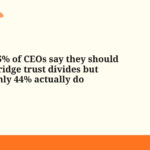
The organizations that handled high change volume effectively shared one characteristic. Seventy-one percent of them involved employees in designing the change before rollout, not just communicating it afterward. Among low-effectiveness organizations, that number was 19%.
The report also tracked when fatigue set in. In organizations with poor change track records, employees began showing resistance after the fourth major change in a 12-month period. In high-effectiveness organizations, that threshold was closer to nine.
The difference was not the number of changes. It was whether employees experienced them as things done to them or things designed with them.
Where the Standard Playbook Breaks Down
The frameworks most organizations use for change management share a common architecture. Leadership defines the change. Communications explain it. Training enables it. Metrics track adoption. Employees are recipients of the process, not participants in it.
That architecture worked when change happened sequentially. It breaks down at 15 changes per year.
The communication load alone becomes unmanageable at that volume. Explaining each change thoroughly enough for employees to understand why it’s happening would consume most of the calendar year before anything else gets done. Organizations end up choosing between depth and frequency. Either choice produces a version of the fatigue Deloitte documented.

A 2023 Harvard Business Review analysis of 600 change initiatives found that the strongest predictor of successful adoption wasn’t communication quality or training completion. It was whether employees had meaningful input into how the change was implemented in their specific context. Deloitte’s 2026 data is consistent with that finding — and larger in scale.
Why Co-Design Works When Communication Doesn’t
The organizations Deloitte identified as change-effective didn’t skip communication or training. They did those things and added one step most frameworks treat as optional: structured employee involvement before rollout.
The distinction matters because most changes that fail don’t fail at the announcement stage. They fail at the team level, where a policy that made sense at the executive level runs into operational realities that leadership didn’t anticipate.
Organizations that surface those realities early — by involving the people who will execute the change in designing its implementation — avoid a category of problems that communication cannot fix after the fact.
Deloitte’s 2026 report calls this shift moving from “change management” to “change enablement.” The practical difference: instead of asking “how do we get employees to accept this,” the question becomes “what would employees need to have designed this themselves.” That is not a communication question. It is a design question. And it requires different timing — employee input during the design phase, not the rollout phase.
What 15 Changes Per Year Requires
At this volume, sequentially managing each initiative through a standard change process isn’t realistic. The math doesn’t work.
What replaces it, in the organizations navigating high change volume effectively, is a more distributed model. Teams have more latitude to translate organizational direction into local implementation. Managers are developed as change leaders, not change communicators. The central change function shifts from owning the process to building the organization’s capacity to handle change without full-cycle intervention every time.
That is a significant structural shift from how most HR and change functions are set up. But the alternative — applying a methodology designed for a different change volume — is what produces a 27% success rate.
My Perspective
A 27% success rate on organizational change, across 10,000 organizations globally, is a systems failure. The standard playbook was designed for a different world. Deloitte’s data points to a reallocation of effort: less time on communications architecture, more time on involving employees in implementation design early enough that their input can actually change something. Organizations that make that shift will absorb the same number of changes with less fatigue and better outcomes. The ones that keep sending all-hands decks will keep getting the same 27%.