






When Harvard Business School professor Teresa Amabile asked 669 managers to rank the top motivators of employee performance, the results were decisive. Recognition for good work came in first. Tangible incentives placed well. Clear goals scored high.
Progress in meaningful work came in dead last.
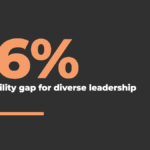
Only 5% of managers — 35 out of 669 — ranked progress as the number one motivator. Ninety-five percent got it wrong.
Then Amabile collected the actual data from the employees themselves. What she found was the opposite of what nearly every manager predicted.
12,000 Diary Entries, One Clear Answer
Amabile and her research partner, psychologist Steven Kramer, designed one of the most granular workplace studies in the history of organizational psychology. They recruited 238 employees across seven companies and asked each person to complete a daily diary entry at the end of every workday.


The diary captured emotions, moods, motivation levels, and perceptions of the day’s work. Employees also noted specific events — positive or negative — that stood out. Over several months, the study accumulated nearly 12,000 individual entries.
“We wanted to understand the inner work life of employees in real time,” Amabile told an audience at a Harvard Business Review event. “Not what they remembered in a quarterly survey. What they actually felt at the end of each day.”
The pattern that emerged was overwhelming. On days when employees reported their best moods, highest motivation, and most positive perceptions of their work environment, the single most common trigger was the same: they had made progress on meaningful work.
Not a promotion. Not a bonus. Not public recognition. Progress.
The Progress Principle
Amabile and Kramer called it the “progress principle” — the idea that of all the things that can boost emotions, motivation, and perceptions during a workday, the single most important is making progress in meaningful work.
The inverse was equally powerful. On the worst days — the ones marked by frustration, disengagement, and negative emotions — the most common trigger was setbacks. Being blocked, stalled, or unable to move forward.

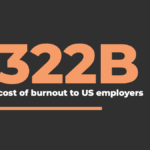
What made the finding striking was the scale of the effect. Even small wins mattered. A 28% subset of events that participants rated as having only minor significance to the project still had a major impact on how people felt about their work that day.
“Managers tend to think of motivation as this big thing — the annual review, the year-end bonus, the promotion cycle,” Kramer said in a 2011 interview with Daniel Pink. “What we found is that motivation is a daily experience. It lives in the small moments of forward movement.”
Why Managers Get It So Wrong
The gap between what drives employees and what managers believe drives employees is one of the most consistent findings in organizational research. But Amabile’s data made the gap impossible to ignore.
When those 669 managers ranked their motivators, they put recognition at the top because recognition is visible, memorable, and easy to administer. It is also what managers themselves tend to value. The projection is natural but wrong.
Progress, by contrast, is invisible. Nobody sends a company-wide email when a team moves a project forward by 2%. No one rings a bell when a developer fixes a bug that was blocking a feature. The daily grind of incremental improvement is easy to overlook precisely because it lacks the drama of big events.
But drama is not what fuels sustained motivation. Consistency is.
Amabile’s data showed that the relationship between progress and inner work life operated on a feedback loop. When people made progress, they felt more motivated. When they felt more motivated, they were more creative and productive. That productivity generated more progress, which generated more motivation.
Setbacks triggered the opposite loop — frustration led to disengagement, which led to lower output, which created more setbacks.
The Manager’s Role: Remove Barriers
The most actionable finding in the progress principle research was not about what managers should add. It was about what they should remove.
Amabile and Kramer identified two categories of daily events that influenced inner work life: “catalysts” (actions that directly supported work progress) and “nourishers” (interpersonal events that lifted spirits). Both mattered, but catalysts had a stronger effect on sustained performance.
The most impactful catalysts were not inspirational speeches or team-building exercises. They were mundane operational moves: setting clear goals, allowing autonomy, providing sufficient resources, and — above all — removing obstacles.
“The single most powerful thing a manager can do,” Amabile wrote in the Harvard Business Review article “The Power of Small Wins,” “is to facilitate progress by removing barriers and providing help.”
This is not glamorous work. It means clearing bureaucratic bottlenecks, making decisions promptly so teams are not left waiting, and shielding people from the organizational noise that has nothing to do with their actual work. It aligns with what researchers have found about how context switching costs teams far more than most leaders realize.
What This Means for Recognition Programs
Amabile’s research does not argue against recognition. It argues against over-reliance on recognition as a motivational strategy.
Recognition is a nourisher. It makes people feel valued. But without the foundation of daily progress, recognition becomes hollow. Praising someone for effort while simultaneously blocking their ability to move forward creates cognitive dissonance, not motivation.
The most effective organizations Amabile studied did both: they removed obstacles to progress and recognized people when they overcame them. But the order mattered. Progress first, recognition second.
“If you could only do one thing to improve the inner work lives of your employees,” Amabile said, “do not throw a party. Clear their path.”
Applying the Progress Principle Daily
Kramer suggested a practice he called the “daily progress check.” At the end of each workday, a manager asks one question: What did my team move forward today? And if the answer is nothing — what got in the way?
The practice takes five minutes. Over weeks, it creates a pattern of awareness that fundamentally changes how a manager allocates attention. Instead of spending 70% of their time on reporting, politics, and email, progress-oriented managers redirect toward the activities that actually drive motivation: goal setting, resource allocation, and obstacle removal.
One of the companies in Amabile’s study implemented a weekly “progress review” alongside its standard metrics review. Within four months, employee engagement scores rose by 19% and project completion rates increased by 14%. The company did not change its compensation, its perks, or its leadership team. It changed where leadership attention went.
The lesson is not complicated, but it is humbling. Most managers are spending their energy on the motivators that rank fifth while neglecting the one that ranks first.
The employees told Amabile exactly what they needed — 12,000 times, in their own words, at the end of their own workdays. The answer was always the same.
Help me make progress on work that matters. Everything else — the recognition, the incentives, the rewards that so often backfire — is secondary.